That is the subject line in an email that came today from
Town and Country magazine, to which it seems I subscribe. A dryer? I had to
know more, so I clicked. Sure enough, Hearst (the magazine’s publisher) is
giving away a General Electric Gas Dryer With Stainless Steel Drum and Steam.
For clothes. I don’t know what I was expecting. A dryer for apples, maybe? Or
hair? Or coffee beans? Or . . . well, anyway, this one is for wet clothes. Do I
want a dryer? No, I don’t. I already have one. Two in fact. One in Vermont, and
one in France. So I didn’t enter the sweepstakes.
But
it got me thinking: Why would Town and Country, a posh magazine if ever there
was one, come after me with a prosaic household appliance? I guess because
Hearst also owns Good Housekeeping and lumps its subscribers together, but
still. If I were into housekeeping (which I’m not), a nice prize would be a
butler. Or a two-week vacation in the Bahamas, or a chalet in the French Alps.
The
incident reminded me of the time my husband, newly arrived in Fontainebleau
(also posh, at least by our standards), was invited via a telemarketer to
attend a luncheon about sweaters. It was a free lunch, so he went. The lunch
was in a restaurant on Rue Grande, and there were about 40 people there.
Everyone at his table thought they had come to hear about sweaters and enjoy
French cuisine. Wrong: The presentation was about mattresses. To this day, he
cannot explain it.
PS: If you need a dryer, feel free to use my name. It seems you have two chances to win. Runner up gets a top-loading dryer with interior drum light. Your housekeeper is gonna love it.
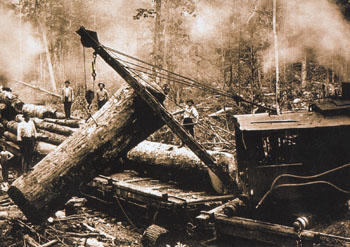
Lumberjacks stand beside old-growth chestnut trees in North Carolina around 1910. (Forest History Society, Durham, N.C.)
“Imported on plant material in the late 19th century and
first discovered in 1904 in New York City, the blight—an Asiatic fungus to
which our native chestnuts had very little resistance—spread quickly. In its
wake it left only dead and dying stems. By 1950, except for the shrubby root
sprouts the species continually produces (and which also quickly become
infected), the keystone species that had covered 188 million acres of eastern
forests had disappeared.” —The American Chestnut Foundation
In
a region famous for its picturesque settings, Francis
Cove is exceptional, a rather largish bowl with an encircling ridgeline in
the mountains of Western North Carolina, about two miles from downtown
Waynesville. The cove faces more or less northeast and opens into a little
valley. In the nineteenth century, this area produced some of the largest
American chestnut trees ever recorded.
Except
for the high tannin content and the resulting rot resistance of the wood,
chestnut appears not to have been much valued as a timber species. It splits
too easily for framing uses, and it often grew with a twist, somewhat offset by
the fact that it might grow 100 feet before branches disturbed the trunk. This
made it possible to get very long, unblemished beams from chestnut.
Around
Waynesville, its chief value was for tannin extraction, and the Champion Paper
Company of my childhood was the Champion Chestnut Extract factory of my
father’s. Times change. The hill folk used to harvest the chestnut mostly for
the tannin, and they called it “acid wood.” It was the chief source of natural
tannin in the U.S. before the blight, and there was so much chestnut that many
of the extraction factories were able to continue operation into the 1960s
using standing dead stumps. Somewhere I had
heard that the largest American chestnut on record was about twelve feet in
diameter. One day I repeated this bit of hearsay in a casual conversation with
someone at the American Chestnut Foundation
(the goal of the ACF is to develop a blight-resistant tree and restore the American
chestnut to its native range in eastern woodlands); one thing led to another,
and retired UNCA professor Dr. Garrett Smathers dug up an actual reference, a
tiny mention in Charlotte Hilton Green’s 1939 book Trees of the South. There she states, “Perhaps the largest of our
American chestnuts was one in Francis Cove, western North Carolina, which had a
diameter of seventeen feet and a height of more than one hundred feet.” Another
colleague found a similar reference
in a 1915 issue of American Forestry,
which stated that “a tree with a diameter of seventeen feet has been recorded
from Francis Cove in North Carolina.” Well, Garrett Smathers actually knew
where Francis Cove was, and recalled knowing someone who knew where the stump
of that old giant was. That’s how these things come about: threads of memory,
oral history, dim recollections, some persistence and curiosity sometimes lead
to the real thing. Thus began a pilgrimage in search of evidence of the perimeter of that tree. Garrett dug up some
names, including Gene Christopher, who was a relative of Garrett’s late friend
Mr. “Pink” Francis.
A Visit to Francis Cove
Francis
Cove has been populated with the Francis and Christopher families for quite
some time. In 1887, William Francis chose the site for a water-powered
gristmill, now on the National Register of Historic Places. Today, Francis Cove
is home to Christopher Farms, a small orchard that has been in family hands for
generations.
Gene
and Doug Christopher run not only the orchard but also a small retail produce
enterprise, a slightly modernized version of the old mountain stores, which you
can find today only in truly remote parts of Western North Carolina. The
Christopher Farms store sells real sourwood honey (not clover with a sourwood
label), a wide variety of apples, locally produced eggs, and 100 percent pure
maple syrup. (A poster above the shelf of maple syrup informs you that Aunt
Jemima syrup is 2 percent maple and the maple content of Log Cabin syrup is
zero.) One of the store’s niceties is that you can call up and someone will
take your order over the phone and box up the groceries so your granddaughter
can pick them up—as one young woman was doing I arrived at the store.
With me
was Dr. Paul Sisco, a geneticist for the American Chestnut Foundation
and a world expert on this species. Our
visit had a purpose other than getting us outside on a promising early spring
day. We were trying to install a small demonstration chestnut planting at the
Western North Carolina Nature Center in Asheville, forty minutes away, and we
thought it might be nice to give folks a concrete idea of the actual size of
these “redwoods of the East” by placing our kiosk in the center of a gravel pad
of the same dimensions as a cross-section of this arboreal monster.
When
we arrived, Gene (whom I had spoken to earlier on the phone) was off at jury
duty and brother Doug was manning the store. Doug managed to break away from
the busy phone long enough to walk us outside and point out where we should
look. Neither he nor his brother had been up to the site for maybe fifteen or
twenty years, and neither could promise that we would find anything. Doug
volunteered a couple of interesting items: There were actually two big trees,
the second nearly as large as the first; in the old days you could turn a cart
around inside the larger tree. After giving us directions, Doug returned to the
phone, and Paul and I were on our own.
Up
through the woods we went. I was carrying an arsenal of camera hardware,
including a digital camera and a camcorder, a vial for collection of chestnut
debris for carbon-14 dating, orange flags to mark the perimeter for
photographing, rope, a ruler, just the basics. Paul had about the same amount.
Optimists. We stopped in the area where Doug had indicated we would find the
first stump and began looking around.
As
a woodcarver, I have found that chestnut has two distinct features. One is its
slight baby-aspirin tint, coming from the tannins that preserve it. The other
is its ease of carving, particularly when one is carving contours. As a rough
field test, I use my pocketknife to shave through the exterior rot of a fallen
limb, scrape down to solid wood, and then carve a curved cup. If it is “easy
enough” and it is orange, it’s a safe bet it’s chestnut. Since these hills used
to be covered with the stuff, it’s a pretty safe bet anyway.
Paul
and I spent twenty minutes walking around the first site. The earth under our
feet had that unmistakable feel of a springy mattress stuffed with centuries of
humus, penetrated with the bones of dead trees and stumps—some of them chestnut
but none of them large. Trickling invisible water . . . mushy, muddy places
where seeps emerged out of sudden dips in the slope . . . wildflowers. Our
exploration yielded some briar cuts, a warning from a neighborhood brace of
watchdogs, and not much else. Halfway through the first site visit, I returned
most of my data-collecting gear to the car.
The Second Site
The
second site was at the top of the abandoned orchard. It had a lot of fallen
timber. In the right places, chestnut has the look of driftwood, but here it
looked more brown on the exterior. Doug had volunteered a few comments about
the out-of-towner who had come up several years ago, planted the orchard
between where the two trees once stood, then disappeared, leaving acres of
untended trees right next to the impeccably maintained orchards of Christopher
farms. The fellow had also overseen the obliteration of the entire mountainside
of its timber. “Made his million and went back to Florida” was Doug’s comment
on the subject.
Paul
and I spent another half hour wandering in ever widening circles. The spring
ground, even in late March, was beginning to sprout a lot of wildflowers. I
felt guilty stepping on the bloodroot, trout lilies, wood anemones, and
squirrel corn, and was truly surprised that they were out in such early
abundance. I normally don’t even look until late April or early May.
Much
of the fallen timber turned out to be chestnut, based on my little field test,
but we were unable to locate the stump of the old giant. There was a lot of
water and moisture on this side of the mountain, perhaps accounting for faster
rot (and poorer fortunes for two amateur giant hunters) as well as for the size
of these huge trees.
Nor
were we able to find chestnut sprouts. The leaves were not out yet, but you can
still usually identify them. Paul had heard that where you find chestnuts
easily today is in places where they grew most poorly in the past. That’s
because many trees have problems growing in those places. But where they
formerly grew best, any tree can grow, and the niche of the chestnut was
quickly filled with other species. In fact, some biologists say that the best
thing ever to happen to biodiversity in our mountains was chestnut blight, since
the more commercially valuable oaks, poplars, and hickory colonized the empty
chestnut stands. (These biologists don’t get invited to my house for dinner
much!)
Vanishing Traces
We
went back down to report to Doug that we had found nothing and were fortunate
to run into Gene, who had just gotten off jury duty. He took a few minutes to
run us back up the hill and point out exactly where the tree had been. We had
been looking about 100 yards too far to the left, and he pointed out the little
rise and the flat upon which he recollected the stump had been. Gene said that
the big tree had yielded twelve to fourteen chords of acid wood, or about 1,800
cubic feet. His grandfather and father had harvested it around the turn of the
century.
He
also said that the forest we were looking at had already been cut twice in his
lifetime (he was about sixty years old) and that it was within twenty years of
another harvest. That would mean one heck of a lot of productivity for this
site, and might explain why the biggest chestnuts were found here.
Gene
drove back down the hill to the busy store, and Paul and I trudged through the
woods to the designated place, but we were unable to find even a hint of the
big tree—which is pretty much what one would expect when a tree has been gone
for 100 years. It’s a miracle that there was any crumb left fifteen years ago
when Gene recalled last seeing it.
We
just don’t find big chestnuts stumps any more. Even the biggest stumps can’t
last forever. But at least we did get to the site. The earth that supported
these big trees remains intact, no matter how many “foreigners” mow it down
from time to time. It can support the chestnut again. All that’s missing in the
equation is the chestnut, and we’re working on that. I’m planning a visit back
there in 700 years to see the replacement trees. Paul, unfortunately, will be
too old by then to go with me. But I’ll take some pictures for him.
And
the site did yield something for me: a rusted lucky horseshoe, complete with a
nail or two. Maybe off a horse and cart that used to turn around in the old
stump? I’d like to think that, anyway.
Forrest MacGregor is an
engineer, inventor, and artist who hails originally from the mountains of
Western North Carolina. He currently lives in Randolph, Vermont. Much of his
art and writing explores modern man’s relationship to technology.
Darcy Daniels and her husband were living in my hometown of Randolph, Vermont, when their three-year-old daughter became critically ill. Today Darcy sits on the Family Advisory Council at Massachusetts General Hospital, teaches history at Mount Ida College, and writes a blog for parents of chronically ill children. The following post, used with permission, is from her blogBrave Fragile Warriors.
By Darcy Daniels
As the mom of a chronically
ill kid, there are things that get thrown at me all the time with doctors,
nurses, school nurses, pharmacies, insurance companies, etc. My daughter takes
a nice cocktail of daily medicines, along with blood sugar checks and other
concerns due to her immunosuppression. Yesterday alone, I had two calls from
the school nurse, two from the specialist’s office about prescriptions and
appointments, another to confirm an ultrasound, and one visit to the primary
care physician, for (of all things) a sprained knee. There are no breaks with
this child. It’s a lot, and it can wear on you. However, I have grown as a
person and a parent since Wendy was originally diagnosed, and sometimes when I’m
feeling a tad overwhelmed, it’s helpful to visit my most helpless moment to see
where I am today, how far I’ve come, how far we’ve all come.
It was one of the first
weeks that we were in the PICU of Massachusetts General Hospital. We had been
transferred first from our local hospital to Dartmouth, and then transferred
again to Mass General. Wendy was three and a half, and normally active to the
point of hyperactivity. She was always running, always joking, always testing
the limits of EVERYTHING including my sanity. Then her illness came and she was
in terrible pain, she was dehydrated, her kidneys had shut down along with
other organ failures. She was in really bad shape.
Doctors came in and out,
whole teams of them, explaining to us what was going on, what was happening,
what they were trying, how long we would be there. It was terrifying and
isolating and we had to learn a whole new vocabulary over night. I would stand
at rounds and take notes, of the doctors, their names, their specialties, what
they were saying, what I didn’t understand, and then after they left, I would
sit down and google the terms and try and piece together what the hell was
going on.
It was like living in a
nightmare.
Wendy was largely
unconscious, and had tubes in and out of her with medicines and different
solutions. I had a flurry of emotions: fear, isolation, uncertainty, but the number
one thing I felt was helpless.
As a parent, I was used to
calling the shots for everything (with my husband of course). What Wendy ate,
what she wore, making sure she brushed her teeth, making sure she had the
proper number of minutes for her time out. Worrying whether she’d make her
milestones, if she was eating enough vegetables, you know the drill. Too many
decisions that we as parents make ourselves crazy over, wishing there were a
no-fail guide book to read and learn from.
Likewise, every parent has
felt helpless at some point. We all have to let our kids experience life on
their own terms, and that means getting hurt. How many of us felt helpless when
their kid rode with out training wheels for the first time? Sang solo in a
musical production? Had to get vaccinations? Had a badly scraped knee? We are
helpless because we just have to let the moment happen, but hopeful that it
will go as well as it can go. That’s parenthood: responsibility, helplessness,
hopefulness, angst and joy.
Early on in Wendy’s illness
was when I was the most helpless because I went from being the
Primary Parent In Charge, to just sitting there while other people tried to
save her life. I couldn’t do much more than answer questions, sign consent
forms, try to make sense of it all, and hold her tiny hand. At some point, one
of the nurses took pity on us and decided that we should hold Wendy, that it
would be good for all of us if we could do this one, simple, thing. But it’s
not simple with all the tubes and wires, all the timing, all the schedules.
It took the nurse the better
part of an afternoon to plan when to unhook, when to drain, when to unplug
certain wires and tubes. Between rounds of dialysis, before labs. Slowly things
were capped off and Wendy was ready to be held. They sat me in a chair and
brought her the two feet she needed to travel from the hospital bed to my lap.
Here is where the most
helpless part kicks in. When they put Wendy in my arms, I was holding her
with both of my arms supporting her from beneath. And I couldn’t help it, I
started crying, out of the pain that she was suffering and the joy of holding
her again, and the uncertainty of our future. The tears just ran down my face. But
I couldn’t wipe them. They rolled down my face and splashed onto Wendy, and my
arms were pinned beneath her. I couldn’t wipe my own tears and other people had
to wipe them for me so they wouldn’t fall on my impossibly sick child and I
couldn’t do anything about it.
That was my most helpless
moment.
It is unlikely that I will
ever be that helpless again, because I know so much more, can do so much more,
and Wendy is so much stronger. But it helps to remind myself that even at my
most helpless, that people were there to support me, and even at my most
helpless, we all made it through.
And we will again.
Darcy Danielsis the mother of two girls and a professor of history at Mount Ida College in Newton, Massachusetts. Her blog is called Brave Fragile Warriors. Check it out here.
For several years now, I’ve had this crazy notion that
involves arm-twisting folks from my hometown—as many as possible—into writing down their
stories. My dream is a library of personal histories by, for, and about the
people of Randolph, Vermont. I began working on the project a few years ago,
and the upshot was Korongo, the publishing company that Patrick and I started in the back of his art gallery on Merchant’s Row. Then we closed the gallery and moved to France, and I set the
dream aside. But dreams die hard, so recently—while enjoying another balmy winter in France but missing my hometown—I invited some friends with Randolph roots to write up a few stories for Sadie & Company. Daryl Grout wrote about Two Weeks in Tuscany that marked 32 years of marriage for him and his high-school sweetheart. Joann Farnham Magee responded to my request by sitting down and writing Ivan’s Story, a moving account of the months she spent trying to win the trust of an abandoned Great Dane—all last year I followed their encounters on
Facebook. Sixteen-year-old Addison Blanchard-Rooney sent me a Letter From Germany, where he is spending his junior year. His letter was, by sheer coincidence, just what I needed—funny and inspiring, a reminder that
discomfort can lead to surprise and even awe. For some reason, Randolph produces a lot of good writers. Iceland and Norway, too—must have something to do with long, dark winters. I am grateful to Daryl, Joann, and Addison for their contributions to Sadie & Company, and for helping to get my “Randolph story project” back on track.
Can any of you recall a time in your life when you were
puzzled about how to flush a toilet? Now, I’m aware that that’s a highly
unorthodox introduction to any piece of writing, but really; please think on
the matter. Does a solid memory not come to mind? For most people, that would
make sense. However, that’s a good example of my reality lately. On September
5, 2015, I lived through this very moment. The day I moved to Germany. And
that, my friends, welcomes you into the life of becoming an exchange student
exactly as all of those brave enough to take on this endeavor are welcomed:
that first moment, which in retrospect is the most raw combination of funny,
embarrassing, and downright humbling.
To begin more properly, I ought to introduce myself. My name
is Addison Blanchard-Rooney, and I’m spending my junior year of high school near
Cologne, Germany. I come from a small town in Vermont, and since that first
memory of being confused, my life has been a mixture of adventure, new fun
experiences, and eye-opening realizations, topped with silly foreign language
faux pas, drizzled with deep conversation, and baked for an hour at 300
degrees. (Fahrenheit, mind you—even after nearly five months of being here I
still couldn’t tell you that in celsius if my life depended on it.) That’s what
I call the recipe of being an exchange student.
Up to now it’s been smelling quite good as it’s cooking. I
haven’t tasted the end result yet; that part comes in July when I fly back
home. But I already know of all the years I’ve cooked, while that may not be
many, this will be the one to get a Michelin star.
My daily life here leaves me with no complaints other than
the odd half-rain/half-snow weather I’ve most decidedly not gotten used to
after coming from my fluffy white winter wonderland of Vermont. I wake up and
begin my day most mornings with some sort of German roll topped with varying
sausages and spreads. My favorite is liverwurst. I like to remind myself that
it’s similar to pâté, to feel fancy.
I then walk to school, a 15-minute
journey through the center of town, before getting to the third biggest high
school in Germany, where I learn many things about history and
German grammar and biology but where I also am asked by peers to
say things like “Donaudampfschiffahrtselektrizitäten-hauptbetriebswerkbauunterbeamtengesellschaft” (to be fair, Germans can’t say it without reading it anyway) and if I like
Donald Trump.
So there’s the everyday life and there’s also the big “This
is why I’m here” moments. Moments like dreaming in a foreign language for the
first time and realizing you finally used a new grammar concept correctly in
speech without thinking about it first. (This is hard. For instance, German has
five words for “the,” and sentences look like this: “I want at beach swim go,
because it hot is.”)
There are the moments when your breath is taken away. This
happened to me when I stepped into the main hall of the Cologne train station
for the first time and stood like a deer in headlights as I looked up,
awestruck as the Cologne Cathedral looming above me, its presence totally
tranquil and beautiful but with mocking undertones making me feel ridiculously
small and young. Never before was I put in my place by a building.
There are also the more political moments, such as seeing
first-hand how the refugee situation is actually being handled. For instance,
just 400 meters from my house here, the city government is planning on building
a complex for the refugees accommodating 800 people. While almost every
individual I’ve met has supported the refugee issue, situations such as this, where the city decides to cram the people together whilst looking past the
several zoning regulations about to be broken, really frustrate citizens.
After all, Germans are very, very rule-and-order-following people. Just one
more of the never-ending list of differences ranging from gender roles to pen
styles to lack of bagger at the grocery store. And boy, do Germans love their
sales at the supermarket.
I don’t see a time in the near future where the surprises
like this will stop coming, and I couldn’t be happier about it. That’s why I
came here—to be immersed somewhere totally new. I finally am, and ladies and
gentleman, I’m flippin’ loving it.
# # #
Addison Blanchard-Rooney is 16, from Randolph, Vermont and currently living in Leverkusen, Germany. His interests span the polar opposites of more sophisticated things such as writing, traveling, cooking, and learning foreign languages, as well as being a typical teenage boy enjoying sleeping in, computer games, and Netflix. He hopes to one day work in international politics, journalism, and/or linguistics, and his bucket list includes skydiving, entering a pie-eating contest, and learning how to whistle. You can follow Addison's blog on Wordpress.
It all started in early January 2015 when I found a Great
Dane lying in a ditch near our home. As I approached him, he raised his head and
hobbled to his feet. He didn’t immediately run away, but he made it clear that
he wanted nothing to do with me. As I spoke softly to him he started to walk
off, and that is when I noticed his leg wound, which was visibly open down to
the bone. As I stood watching, he ran into the woods, where he had apparently
been living for quite some time given his deteriorating condition. He was so
thin and could not put any weight on the wounded leg. The next week or two I
saw very little of him. He would go to our pond to drink and then run back into
the woods, not giving anyone a chance to get close. My neighbor said that he
thought the Dane had been dropped off, as no one in our area had a rental cabin
or a large dog—and he has lived in the same place for over fifty years and would
know. Mid January we had a light snowfall, and my husband and I went walking
into the woods, following the Dane’s tracks in the snow. We were able to see
all of his trails, which seemed to just circle around with no definite stopping
place.
Lessons in Patience
In early February, while on a walk, I found the Great Dane’s
hideout—his base camp area, which happened to be in the next pasture from our
home. Since my first sighting of him I always carried warm hot dogs in my
pockets whenever I went walking, for I never knew when I would come upon him. I
had at this point named him Ivan, for it seemed like a strong name to me, and
for him to survive in the freezing winter without food or a warm shelter was a
definite sign of strength.
From that day on I started taking food to him twice
a day, at the same time every day, sitting for hours through any type of
weather, hoping to see him come to eat. It was a long process, which helped me
find patience, which is indeed a virtue. Each trip to the pasture, about a
quarter of a mile one way, I carried my sitting stool, my phone, my BB gun, a
bowl with kibble, a can of dog food, baggies with warm hot dogs and chicken,
and a feeding bowl—which happened to be an extra bowl I had for my heifer,
Breaker, who I rescued when she was only two months old. I gave Ivan small
portions of food initially, as I did not want to give him too much in case his
system had a problem processing too much food too soon after having so little
so long.
Initially Ivan would appear, see me, then run away back into the
woods. I was so tempted to just take him his food and leave, but I thought
better of it, as I wanted him to associate food with me, to hear the sound of
the can of food opening, to hear my calling his name and know I meant him no
harm. Day in and day out I went, morning and night, regardless of the weather,
to bring him food. His leg wound looked terrible, but it was no longer open to
the bone. To aid in his healing I started putting an antibiotic in his food
bowl inside hot-dog pieces.
Hot Dogs and Freezing Cold
After having Ivan see me each time he came to eat and my
leaving trails of hot dogs and chicken that brought him ever closer to me, I
was thrilled to see him actually leave the shelter of the wood line and come
closer. I neither made any sudden moves nor spoke to him as he approached. I
wanted him to know that I would not harm him in any way or make any demands on
him.
It was now March, and the weather was getting progressively
colder. I would sit for hours in freezing rain, snow, and wind, with temps of a
numbing 16 degrees down to zero. I wanted Ivan to know he could count on me to
be there always. I found myself praying to the dog Gods for Ivan to
surface and to eat. I found myself crying when he didn’t, for I wondered if my
presence was keeping him away, thereby prohibiting him to get the nourishment
he so sorely needed. Just when I thought he had moved on, he would enter the
pasture from a different point. Sometimes when he saw me, he would leave only
to circle around and come back from a different direction to eat—progress!
The owners of the property where Ivan
was hanging out were soon to be there camping, which I knew would scare Ivan
away, so for the next two weeks, I kept moving Ivan’s food bowl closer to our
pasture and away from the area where the owners would be camping. Ivan managed
to find his bowl each day and gobbled down his food. A friend gave us a large
crate to put in the field so we could make a shelter for Ivan to get out of the
wind, rain and cold.
Getting Closer
By the second week of March, Ivan felt comfortable enough
with my presence and me hanging around, that I started talking to him,
sometimes singing (which I found may have been the cause for him not to appear
for two days). I wanted him to get used to me and my voice.
After a lot of
coaxing and my gentle voice, he did come up to me and gently took a piece of
hot dog out of my hand, but he would immediately cringe and back away,
sometimes growling or barking. He would whine while approaching as if to ask me
not to hurt him if he came closer, but in no way was he ready to trust me
completely. I did not attempt to touch him, as I think that would have taken us
back several steps. Both morning and evening meals I would see Ivan go into the crate to grab pieces of hot dogs and chicken I had put inside, but he would not use it as a shelter. He would go back into the woods almost immediately after eating. Then one day toward the third week in March he came and sat beside me and nudged my pockets, as he could smell the hot dogs I had buried in there. I told him I was going to pet him, and although he cringed when he saw my hand, he allowed me to pet him for several minutes. I spoke softly to him and continued for about the next half hour. It was almost dark by then, and I told him I needed to go home and that I would see him tomorrow.
A T-bone Steak
March was a very cold month for anyone to be out sitting in
a pasture—or for finding shelter if they were a stray dog. The temperatures
ranged from zero to 17 degrees, with freezing rain and snow hitting my face
as I waited and waited for Ivan to appear. My husband kept texting me to see if
I was okay and asking how much longer I was going to wait. I think at one time
I had waited up to six hours for Ivan to make an appearance as I sat freezing
on the little stool I carried with me. Just as I was about to leave and trudge
home, feeling totally defeated, he would come out of the woods and bark at me,
which I assumed was him either saying “Hello” or “Are you still here?”
The next morning, as I fixed his food bowl, he came to eat,
and then just started barking at me loudly and lunging at the same time. This
went on for about 40 minutes nonstop. My husband heard him from our house and
was worried that I was in danger. I assured him I was fine and that Ivan just
had a lot to say. While Ivan was barking at me I would just gently say, “I
know, it’s terrible what someone did to you. I would never hurt you.” He was so
loud that my pet heifer, Breaker, came running across the pasture to see if I
was all right. I had brought Ivan a T-bone steak bone, and after he had
finished barking I gave it to him. He immediately carried it to a spot near the
fence and devoured it. Breaker, along with some of the younger bulls and
heifers who had joined her, stood watch over him to make sure I was okay.
A Miracle—and a Setback
On March 20, about three months after seeing Ivan for the
first time in the ditch, the most miraculous thing happened. I was putting
Ivan’s food in his dish and I called for him, saying, “Ivan, breakfast!” and he
immediately came loping out of the woods, whining, with his tail up and
wagging. He started eating while I still had my hand in his food dish stirring
the combination of kibble, hot dogs, chicken, and antibiotics. After he was
finished he came to sit beside me, and after a few minutes I asked if he wanted
to walk with me a bit. I got up and started walking away. I looked back, and
Ivan was following me. I walked along the creek and around into the pasture
with Ivan following behind me. I went back to our feeding spot, collected my
things, and said, “I am going home now. Do you want to come with me?” and off I
went. Ivan was right by my side, and I would stop every few feet to hug him and
tell him what a good boy he was. We made it all the way home, but when we got
into our yard, Ivan panicked and ran off. Thinking I had moved too fast and
expected too much, I was devastated. To watch Ivan run back into the woods
broke my heart.
A Disastrous Date
The following day was another huge progress report. At 7:30
a.m., I went as usual to feed Ivan, and after a great bonding experience he
again followed me home. He sat with me outside, and when my husband opened the
door to come outside, Ivan was very protective of me and barked and lunged at
him. I told my husband to go and get a warm hot dog and come out slowly and
offer it to Ivan, which he did with great success. We then opened both doors of
our house, and Ivan went in one and came out the other about ten times, until
he felt certain he was not going to be trapped. Within 20 minutes Ivan was
stretched out on our living room floor.
We had plans to go to brunch with a friend, and when it was time to go, much to my surprise Ivan jumped in the car over me and decided he was going to go too. He would not come out of our car, as if to say, “No, you promised you’d never leave me.” It absolutely tore my heart to pieces to take him out of the car and drive away. My heart was wrenched out of my chest when I looked back and saw Ivan running after our car. I did not want this to happen after working so hard to get him to trust me. I twitched all through brunch and couldn’t wait to get home to Ivan. Everyone was telling me that this was a good thing, that Ivan would know I would leave and come back, but I was panicking thinking that I had totally blown my one chance to finally get Ivan to trust me completely. Sure enough, we get home and there is no sign of Ivan.
Two Long Days
That evening I took Ivan’s dinner at the normal time and
there was no sign of him. After sitting until dusk, I again walked home dejected
and feeling guilty. I could not wait for morning to arrive. I was up and out by
daybreak with Ivan’s food. It had rained all night and was extremely foggy, and
a torrential rain was still coming down, with heavy wind and freezing
temperatures. I sat and waited. And waited. No sign of Ivan. I cried
hysterically, texting my husband, saying I had blown it, that it was all for
nothing, that I had totally blown Ivan’s trust. My husband told me that everything
would be fine, to be patient, to not give up.
I sat in the freezing rain for five
unending hours of crying, feeling defeated, feeling devastated for Ivan,
feeling like a failure, and feeling like a total jerk but knowing I would not
go home until I absolutely had to when it got too dark. As I sat there with my
head bent to keep the rain and wind out, I heard a whine, and I look up and
Ivan is coming through the woods to me. This time, instead of going immediately
to his food dish he comes to me and pushes into me. I hug him and cry some
more. After he eats, I say, “Let’s go home, Ivan,” and he follows me. We go
inside, and Ivan immediately makes himself at home. He lets me give him a bath,
as he is covered with pine tar and caked mud. He lets me towel him off, and
then we snuggle on the sofa. My heart is swelling for the amount of courage it took
for Ivan to make the ultimate sacrifice to trust me.
Love and Gratitude
Every day Ivan was with us was one of great joy and love. He
went everywhere with me and for a couple weeks would never leave my side. If I
got up to leave the room he was there with me every single time. He loved
riding in the car, and he loved going to Home Depot every day on our way to
work. He loved walking and did beautifully on a leash. He was my “Baby Boy.” Ivan
had many trials and tribulations to overcome. Our visit to the vet found he had
arthritis, a degenerative disease in his hind legs which would eventually
paralyze him, and several other small issues.
He was almost ten years old,
which is amazing, as most Great Danes have a life span of six to eight years.
His wound was inoperable, as it had been too long since the initial
injury, so it had to heal from the inside out, which takes a long time. Ivan
also had to have a cancerous growth removed from his lip, which was benign. He
was also bitten by some sort of snake in August, and the bite became infected and had to
be lanced. The poor guy just couldn’t catch a break.
His bad leg started to
swell in October, and he began limping badly, some days being much worse than others.
We took him to the vet for an X-ray and received the worst news ever. The X-ray
showed Ivan’s leg was riddled with a very aggressive bone cancer, leaving very
little bone in his leg. The vet said an aggressive cancer at this stage had
undoubtedly metastasized into his lungs, and at best Ivan had only a couple of
months remaining and that those months would be spent in excruciating pain. The remaining bone was so brittle and thin
that his leg could fracture in any given second, so the vet strongly suggested
we get Ivan out of pain.
We made the decision to have Ivan put down right then
and there, which was not an easy decision to make, yet at the same time it was
the easiest decision to make. Ivan had suffered so much already before I found
him. We had a wonderful seven months with him, during which he taught us so much
and gave us so much love. We could not make him suffer any longer.
Ivan passed
away with his head in my lap and my love for him bursting through every fiber
of my being. It was an absolute honor and a once-in-a-lifetime experience to
have had the opportunity to go on this journey with Ivan, and I will forever be
grateful for it and for Ivan.
# # #
Joann Farnham Magee is a native Vermonter who married her high-school sweetheart—she and Ridge will celebrate 46 years together in November 2016. Jo is a pencil artist, an LP vinyl-record collector, a mother, a grandmother, a Harry Potter fan, an avid reader, and a golfer. She loves to travel and to go back “home” to Randolph, Vermont.
# # #
Joann sent me many photos of Ivan, spanning their entire journey together—more than I could fit into a blog post. So I put them into a slideshow, and Joann did a voiceover. I think my favorite image is of the two of them fishing in a nearby pond. —Sara Tucker
The town of Portovenere, in Cinque Terre, is a stopover on this self-drive itinerary, which begins and ends in Florence.
By Daryl Grout
Susan
and I land in Florence on Saturday morning, October 9, two days after celebrating our 32nd
anniversary. Arriving at the Hotel Monna Lisa on the narrow Borgo Pinti, the
first thing we notice is the immaculate streetscape—new paving blocks designed
to match seamlessly with the water-worn stone of medieval times. After checking
into our palatial room in the Renaissance-era mansion, we are soon wandering in
a light rain the glistening streets of this magnificent UNESCO World Heritage
city center.
We are immediately drawn to the dominant Cattedrale di Santa
Maria del Fiore with its iconic Brunelleschi Duomo. Guidebook photographs have
only hinted at the splendor of this structure (reinforcing the maxim that
travel is a necessary). After circling the neo-gothic exterior, we merge with
the tourist flow and find ourselves at the symbolic center of the medieval
Italian Renaissance—Piazza della Signoria and the adjacent Loggia dei Lanzi,
Palazzo Vecchio, and Galleria degli Uffizi.
Sabinae Raptae by Giambologna, Loggia dei Lanzi.
Following the path of Lucy from Forster’s A Room With a View, we cross the Arno River
on the Ponte Vecchio with its famous Corridoio Vasariano (where Medici would
travel unseen between Palazzo Vecchio and their Palazzo Pitti residences).
Turning right on Borgo San Jacopo, we stumble upon delightful Ristorante Mamma Ginafor the first of many delicious meals featuring fresh pasta and the
colorful cuisine of Tuscany.
Sunday dawns sunny, prompting us to avoid weekend museum
crowds and hike into the hills above town. We arrive first at the Giardino
delle Rose, then climb higher to take in the views at San Miniato al Monte with
its statuary-filled hilltop cemetery. After strolling a surreal cypress glade, we fall in with an American
student out on a day-hike. She persuades us to keep walking past the Torre del
Gallo, where we find another amazing meal and spectacular views at Trattoria Omero. Feet aching, we meander along villa-lined lanes to the Forte di
Belvedere entrance to vast Giardino di Boboli before stumbling home to an early
dinner and a jet-lagged bedtime.
Tuesday is Chianti day. We splurge on a driver, leaving
early in a black Mercedes for UNESCO-favorite San Gimignano, famous for its 14
surviving medieval towers. Our driver, Francesco, smartly dressed in tie and
Euro-cut jacket, is worth every penny, correcting our pronunciation and filling
our heads with information at every stop.
We stop in Castelinna for lunch at the subterranean Via delle Volte,
then move on to scenic Radda with wine tastings at Volpaia and Castelvecchi.
Dinner at Antinori’s Badia di Passignano is a mindfulness moment, best meal of
our lives, each course accompanied by amazing Tuscan wine culminating with a
sublime Solaia 2012.
Our final day in Florence begins with early reservations at
Galleria dell’Accademia to view Michelangelo’s David. Afterward, I run
excitedly over to Paolo Sacchi Libreria Antiquaria to pick up souvenir books: an
1869 edition of Dante’s Divina Commedia—Inferno,
Purgatorio, Paradiso. While Susan attends a cooking class, I tour the
Uffizi Gallery enjoying the classics—Michelangelo’s Doni Tondo, Botticelli’s Birth
of Venus, and Titian’s seductive and daring (in 1538) Venus of Urbino.
A Walking Tour of Florence
No trip to a famous city is complete without some flânerie.
Here’s a walk through the heart of the city that avoids motor traffic and pesky
tourist bottlenecks:
Borgo Pinti south to a right at the piazza onto Borgo della
Albizi. Street names will change but stay straight through the massive arch at
Piazza della Repubblica until the charming square at Via de’ Tornabuoni. Take a
slight left onto Via della Vigna Nuova past the Paolo Sacchi bookshop (Dante)
to a left onto (so appropriate) Via del Purgatorio. At the dark intersection of
(lol) Via dell'Inferno, pass through the archway, then left into paradiso at
the magnificent Piazza Santa Trinita.
Enjoy the piazza, then look to the left of the Roman Colonna
della Guistizia for Borgo Santi Apostoli, a classic stretch of shops, restaurants,
and medieval alleyways, emerging finally on Via Lambertesca at the Uffizi. At
the northern center of the now familiar Piazza della Signoria, find the narrow
alley to Via dei Cerchi to a right onto Via del Corso and home.
The village of Barga in the province of Lucca.
Cinque Terre
Day 6–9. On Thursday, we say good-bye to Florence and rent a diesel
Audi for the remainder of our exploration. First stop is Lucca, known for its
preserved Renaissance fortifications encircling the old town. With ramparts
converted to bike paths and parkland (Florence tore down their walls to make a
ring road), I’m surprised that Lucca is still waiting on the UNESCO tentative
list.
North
of Lucca begin the Apuan Alps, our next destination. We pass the famous Ponte
della Maddalena on our way to the lovely (and pleasantly deserted) village of
Barga. Running late, we don’t stop in gritty Garfagnana but opt to navigate the
winding Parco Alpi Apuane route to the coast in daylight.
Our final destination today is Grand Hotel Portovenere in
the Cinque Terre region, and we manage to score Room 214 (terrace with harbor
view) for Susan's 55th birthday weekend. Remnants of Hurricane Joaquin are
hitting Europe this week, and high winds cancel Friday water taxis to the Cinque
Terre villages. Instead we relax and spend the day eating fresh seafood and
exploring the cliffside village of Portovenere.
Water
taxis resume on Saturday to northernmost Monterosso. We manage to backtrack on
a crowded train for a spectacular lunch atop wave-battered cliffs at Vernazza,
but by afternoon Cinque Terre transit systems have been overwhelmed by an
influx of pushy cruise-ship passengers seemingly determined to selfie all five
villages in under four hours.
Unfortunately,
the worst is yet to come. The next morning we arrive early in Pisa, parking in
a massive bus lot pockmarked with grimy facilities. Unfriendly trolley drivers
herd us toward the UNESCO sites. At the far corner of the Field of Miracles a
large crowd has gathered, nearly everyone jockeying to get illusion-photo
selfies holding up the leaning tower. A clever group has assembled on the
opposite corner to push over the leaning tower. Needless to say, we can't flee
Pisa fast enough!
Thank
the Etruscan gods for Volterra, our next stop. A quiet and carefully preserved
mountaintop village, the town might want to reconsider its UNESCO petition (or
perhaps the UNESCO committee should rethink Pisa’s designation). Regardless, we
enjoy the Porto dell’Arco, Etruscan museum, and Roman amphitheatre, leaving us
in a much better mood for our upcoming week in Tuscany’s Val d’Orcia.
Etruscan tombstones, Montepulciano.
Val d’Orcia
Week 2. Arriving
in the rural town of Pienza, we’re a bit nervous about what we’ll find at the Agriturismo il Macchione, but our fears are unfounded. We’re given a huge suite
on the upper floor of a restored farmhouse amidst some of the most spectacular
scenery on the planet. Francesco, the young proprietor, runs an olive oil
business just down the road, and Susan is thrilled to get a tour and some
fresh-pressed Fattoria Fregoli 2015 harvest.
Agriturismo
is the perfect word to describe Pienza’s appeal—the old town is a fifteenth-century UNESCO gem, but tourists can still find farm-town politeness while
shopping for groceries or filling up with diesel. Residents’ biggest concern is
that a movie starring Dustin Hoffman filming this week in the Pallazzo
Piccolomini will spotlight the town for more bus tours next year.
Our
first day-trip takes us just down the road to San Quirico d’Orcia, a via
Francigena pilgrimage town with hilltop gardens hidden behind well-preserved
ramparts. Next stop is Montalcino, an Etruscan hilltop town best known for
Brunello di Montalcino wine. We love this town! Or should I say, We love
Brunello (brownish, smallish Sangiovese grape). After tasting several Brunellos
at Drogheria e Locanda Franci, Susan orders a case on the spot. Later we have
great fun climbing the fortress ramparts enjoying the best views and prettiest
town of our entire trip. Or has the wine influenced our opinion? We must
revisit soon to clarify!
The view from Castello Vicchiomaggio, in Chianti.
We
next visit Montepulciano (of Vino Nobile wine fame) and Siena, but both towns
disappoint; they feel surprisingly gritty and jaded by tourism. We do the
necessary tower climbs and take some pictures, then add the towns (alongside
Pisa) to the been-there-done-that list.
Our
final day in Val d’Orcia takes us south to where Dickens wrote about a lovely
road between the towns of Sarteano and Cetona. Our driver, Francesco, has also
recommended a “Slow Food” restaurant in Sarteano. Well, the views do not
disappoint, the hilltop towns are charming, and our lunch at Osteria da Gagliano
becomes a keepsake memory of traditional decor and cuisine.
With
some daylight remaining, we opt for one last guidebook town and head out for
Radicofani at the base of Monte Amiata, climbing to the windswept Fortezza di Radicofani.
The drive home along tree-lined SP53 to enter Pienza from the south completes
our loop with possibly the most classic of Val d’Orcia scenic routes.
Friday
finds us closer to Florence (for an early Saturday flight) in Greve, after
stopping again in Radda for gifts and travel-wall souvenirs. Our hotel, the
hilltop Castello Vicchiomaggio, has a Shangri-La quality about it, leaving us
with one final magic moment before returning home.
Daryl Grout and his wife, Susan, grew up in Randolph, Vermont. They are now grandparents and live in Brooklyn.